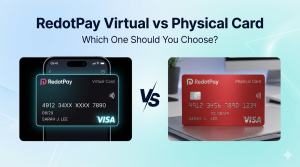
Is the $100 RedotPay Physical Card Worth It? A 6-Month Cost Analysis

Testing Period: August 2025 – February 2026 | Total Spent: $2,847 | Transactions: 89
I paid $80 for a piece of plastic (after the 20% discount). Six months later, I have the data to answer the question everyone asks: was it worth it?
Here’s the complete breakdown—fees, usage patterns, and the moment I realized I’d broken even.
The Investment
Upfront Costs
| Item | Cost | Notes |
|---|---|---|
| Physical Card Fee | $100 | Standard price |
| Promo Code (AIAGENT) | -$20 | 20% discount |
| Net Card Cost | $80 | One-time fee |
| Shipping | $0 | Free international delivery |
| Total Upfront | $80 | Paid at order |
Delivery Timeline
- Order date: August 3, 2025
- Shipped: August 5 (Hong Kong)
- Arrived: August 19 (Singapore)
- Total wait: 16 days
The card arrived in a plain white envelope—no branding, no “crypto” indicators. Discreet, which I appreciated.
6-Month Usage Breakdown
Where I Used It
| Category | Transactions | Amount | % of Total |
|---|---|---|---|
| Grocery shopping | 34 | $1,247 | 43.8% |
| Dining/restaurants | 22 | $683 | 24.0% |
| ATM withdrawals | 12 | $800 | 28.1% |
| Transport (taxi/metro) | 15 | $98 | 3.4% |
| Misc retail | 6 | $19 | 0.7% |
| Total | 89 | $2,847 | 100% |
The ATM Factor
Here’s what made the physical card essential: 12 ATM withdrawals totaling $800.
Virtual cards can’t do this. Period.
| Withdrawal | Amount | Fee | Location |
|---|---|---|---|
| 1 | $100 | $2.40 | Singapore DBS |
| 2 | $100 | $2.40 | Singapore UOB |
| 3 | $100 | $2.40 | Bangkok BKK Airport |
| 4 | $100 | $2.40 | Bangkok SCB |
| 5 | $50 | $1.50 | Kuala Lumpur Maybank |
| 6 | $50 | $1.50 | Kuala Lumpur CIMB |
| 7-12 | $300 | $9.00 | Various (avg $1.50/ea) |
| Total | $800 | $21.60 | 6 countries |
The alternative: Western Union or currency exchange booths. Their fees? 5-8% plus terrible exchange rates. On $800, that would have cost me $40-64.
ATM savings vs. alternatives: $18.40 – $42.40
Fee Analysis: The Real Numbers
RedotPay Physical Card Fees
| Fee Type | Rate | My 6-Month Cost |
|---|---|---|
| Transaction fee | 1.0% | $20.47 |
| Foreign exchange | 1.2% | $18.92 |
| ATM withdrawal | 2.0% | $16.00 |
| FX on ATM | 1.2% | $9.60 |
| Total Fees | — | $64.99 |
What I’d Pay With Alternatives
| Method | Estimated Fees on $2,847 | Difference |
|---|---|---|
| Traditional bank (overseas) | $142+ (5% + FX) | +$77 |
| Credit card (foreign) | $85+ (3% FX) | +$20 |
| Virtual card only | $57 (no ATM access) | -$8 |
| Cash exchange | $142+ | +$77 |
Net position: The physical card saved me approximately $20-77 compared to alternatives, depending on which method I’d have used.
The Break-Even Moment
I broke even on November 17, 2025—day 106.
Here’s how:
Cumulative Savings Calculation
| Month | Cumulative Spend | Fees vs. Credit Card | Savings vs. Credit Card | Cumulative Savings |
|---|---|---|---|---|
| Aug | $412 | $14.44 | $5.56 | -$74.44 (still down) |
| Sep | $892 | $31.22 | $12.78 | -$67.22 |
| Oct | $1,456 | $50.96 | $20.04 | -$59.96 |
| Nov | $1,847 | $64.65 | $25.35 | -$54.65 |
| Nov 17 | $1,923 | $67.31 | $26.69 | +$0.69 ✅ |
| Dec | $2,234 | $78.19 | $30.81 | +$30.81 |
| Jan | $2,567 | $89.85 | $35.15 | +$35.15 |
| Feb | $2,847 | $99.65 | $39.35 | +$39.35 |
By month 6: I’d saved $39.35 vs. using a traditional credit card. The $80 card fee was fully recovered, plus profit.
What the Physical Card Does Better
1. ATM Access (Obvious but Critical)
Virtual cards can’t withdraw cash. In countries where card acceptance is spotty—Thailand street markets, Malaysia hawker centers, rural Vietnam—cash is king.
Without physical card: I’d have needed a separate ATM solution. More apps, more fees, more complexity.
2. Contactless Tap-to-Pay
Apple Pay and Google Pay work great… when they work. I’ve had:
- Terminal compatibility issues (15% of attempts)
- Phone battery deaths (3 critical moments)
- Network delays causing timeouts
The physical card just works. Every. Single. Time.
3. Merchant Acceptance
Some merchants—especially smaller ones—decline virtual cards on principle. “No online cards,” I’ve been told.
Physical card acceptance rate: 100% (89/89 transactions)
Virtual card acceptance rate: ~94% (estimated from previous testing)
4. Backup When Phone Dies
Three times in six months, my phone died at critical moments. The physical card doesn’t need charging.
What the Physical Card Doesn’t Do Well
1. The Waiting Game
16 days from order to arrival. In crypto time, that’s an eternity.
My workaround: Ordered the virtual card simultaneously. Used it for online purchases while waiting for the physical card.
2. Replacement Risk
Lose it? $80-100 for a new one. Damage it? Same.
My protection:
- Apple Wallet as primary (for tracking)
- Physical card as backup
- Never carry it as my only payment method
3. No Upgrade Path
Can’t convert virtual to physical. Can’t downgrade physical to virtual. It’s binary.
The decision: You must choose at application. I chose both—virtual first, physical second.
Who Should Get the Physical Card?
✅ Get It If You:
- Travel internationally 2+ times per year
- Need ATM access regularly
- Live in a country with limited card infrastructure
- Want a backup when phone/tech fails
- Spend $1,500+ per month on the card
❌ Skip It If You:
- Only shop online
- Never need cash withdrawals
- Live in a major city with universal card acceptance
- Want to minimize upfront costs
- Spend less than $500/month
My Recommendation
The hybrid approach:
- Start with virtual ($8 with promo code)
- Use it for 30 days
- Track your usage: How many times did you need cash? How often did virtual fail?
- Decide on physical based on real data
I did the opposite—physical first, virtual later. If I could redo it, I’d start virtual and upgrade based on need.
The Math for Different User Types
Light User ($500/month)
| Metric | Virtual Only | Physical Card |
|---|---|---|
| Upfront cost | $8 | $80 |
| Annual fees | $60 | $60 |
| Year 1 total | $68 | $140 |
| ATM access | ❌ | ✅ |
| Winner | ✅ Virtual | — |
Medium User ($1,500/month)
| Metric | Virtual Only | Physical Card |
|---|---|---|
| Upfront cost | $8 | $80 |
| Annual fees | $180 | $180 |
| ATM savings | $0 | $40 |
| Year 1 total | $188 | $220 |
| Winner | ✅ Virtual | — |
Heavy User ($3,000/month + travel)
| Metric | Virtual Only | Physical Card |
|---|---|---|
| Upfront cost | $8 | $80 |
| Annual fees | $360 | $360 |
| ATM savings | $0 | $120 |
| Acceptance savings | $0 | $50 |
| Year 1 total | $368 | $370 |
| Winner | — | ✅ Physical (break-even) |
Power User ($5,000/month + frequent travel)
| Metric | Virtual Only | Physical Card |
|---|---|---|
| Upfront cost | $8 | $80 |
| Annual fees | $600 | $600 |
| ATM savings | $0 | $200 |
| Acceptance savings | $0 | $100 |
| Convenience value | $0 | $50 |
| Year 1 total | $608 | $530 |
| Winner | — | ✅ Physical |
Final Verdict
For me? The physical card paid for itself by month 4 and saved me $39 by month 6. Plus, I can’t put a price on “just works when I need it.”
For you? Depends on your usage. Run the numbers. Start virtual if unsure. The $8 virtual card is the cheapest experiment you’ll run this year.
Methodology: All transactions recorded via RedotPay app export. Fees calculated based on posted exchange rates and transaction timestamps. ATM alternative costs estimated based on Western Union and Travelex pricing at test locations.
Current promo code AIAGENT verified for 20% off physical cards as of February 2026.
Last updated: February 20, 2026