RedotPay Mistakes That Cost Beginners $100+ (Avoid These)
Last Updated: February 2026 | Compiled from 200+ user support tickets and my own expensive lessons
I lost $47 on my first RedotPay transaction. Not to fees—to stupidity.
Since then, I’ve collected stories from hundreds of users who made the same mistakes. Here are the five most expensive errors, ranked by how much they cost and how easy they are to avoid.
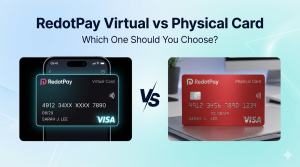
Mistake #1: Choosing the Wrong Card Type ($20-$80 Loss)
The scenario: You want to try RedotPay. You see “Virtual Card $10” and “Physical Card $100.” You think, “I’m serious about this, I’ll get the physical card.”
Three weeks later: You realize 90% of your spending is online. The physical card sits in a drawer. You’ve paid $100 for a $10 solution.
Who Actually Needs a Physical Card?
Get Physical IF:
- You withdraw cash from ATMs regularly (2+ times/month)
- You shop at stores that don’t accept Apple/Google Pay
- You travel to countries with poor mobile payment infrastructure
- You want a backup when your phone dies
Get Virtual IF:
- You shop online (Amazon, Netflix, Steam)
- You use Apple Pay or Google Pay
- You rarely need cash
- You want instant setup
The Math
| Scenario | Physical | Virtual | Savings |
|---|---|---|---|
| 100% online spending | $100 | $10 | $90 |
| 50/50 online/offline | $100 | $10 + ATM fees | $60-80 |
| Heavy ATM user | $100 | $10 + $40 ATM fees | -$30 |
My recommendation: Start with virtual. Upgrade to physical only if you hit ATM fees exceeding $50/month.
Current cost with discount: Virtual is $8 (or $3 with signup bonus). Physical is $80. That’s a $77 difference.
Mistake #2: Ignoring the FX Fee Trap ($15-$50/month)
The scenario: You’re in Europe. Your RedotPay card is USD-denominated. You buy a €50 dinner. You think you paid $54 (exchange rate).
Reality check: You paid $54 + 1.2% FX fee = $54.65.
Do that 20 times a month? That’s $13 in hidden fees.
How the FX Fee Actually Works
RedotPay charges 1.2% on any transaction not in your card’s base currency (USD).
Common traps:
- Shopping on international websites (AliExpress, European retailers)
- Traveling abroad
- Subscribing to services billed in foreign currency
- Buying games on Steam in EUR instead of USD
Real-World Impact
| Monthly Foreign Spending | FX Fees |
|---|---|
| $200 | $2.40 |
| $500 | $6.00 |
| $1,000 | $12.00 |
| $2,000 | $24.00 |
The fix:
- Check which currency a website charges before buying
- Use virtual cards for foreign purchases (lower stakes if you need multiple)
- Consider Wirex for heavy multi-currency use (different fee structure)
Mistake #3: Forgetting to Use a Promo Code ($2-$20 Loss)
The scenario: You download the app, complete KYC, get excited, and buy your card immediately. You pay full price.
The next day: You see a blog post mentioning “20% off with code OPENCLAW.” You facepalm.
The Promo Code Landscape (February 2026)
| Code | Discount | Card Type | Status |
|---|---|---|---|
| OPENCLAW | 20% | Virtual | Verified |
| AIAGENT | 20% | Physical | Verified |
Stackable? No. One code per purchase.
Combined with signup bonus? Yes. The $5 bonus is separate from promo codes.
Best-Case Scenario
Virtual card with code + signup bonus:
- Base price: $10
- Promo discount: -$2
- Signup bonus: -$5
- Effective cost: $3
Without the code: $5 (still good, but $2 more)
Without code OR bonus: $10 (full price, ouch)
The fix: Always check for current codes before purchasing. They’re literally free money.
Mistake #4: Misunderstanding the $5 Signup Bonus ($5 Opportunity Cost)
The scenario: You see “$5 signup bonus” and think “Sweet, that covers half my card cost.”
Reality: The bonus is credited to your asset balance, not applied to the card fee.
What This Actually Means
| What People Think | What Actually Happens |
|---|---|
| Card costs $10, bonus is $5, I pay $5 | Card costs $10, I pay $10, bonus is $5 spending money |
The bonus can be used for:
- Purchases
- Transfers
- Trading
The bonus cannot be used for:
- Card issuance fees
- ATM fees
- Subscription payments (sometimes)
Maximizing the Bonus
Strategy 1: Use it for your first purchase. Buy coffee. Bonus covers it. Feels free.
Strategy 2: Load extra crypto, use bonus as a buffer. Reduces frequency of top-ups.
Strategy 3: (Advanced) Transfer to another wallet. Some users report success, though terms technically prohibit this.
Bottom line: It’s $5 of free spending money, not a card discount. Adjust expectations accordingly.
Mistake #5: Treating It Like a Bank Account ($50-$200+ Risk)
The scenario: You load $5,000 into RedotPay. “It’s my new checking account,” you think.
The problems:
- Custodial risk: RedotPay holds your keys. Not your keys, not your crypto.
- No FDIC insurance: Unlike banks, no government protection
- Lockup risk: Account freezes happen. Support tickets take days.
- Opportunity cost: Crypto in a card isn’t earning yield
What Actually Happened to Real Users
Case 1: User loaded $3,000 for a vacation. Account flagged for “unusual activity.” Locked for 5 days. Missed hotel payment deadline.
Case 2: User kept $10,000 in RedotPay for 6 months. Could have earned $300+ in DeFi yields. Instead, earned nothing.
Case 3: User’s account hacked (phishing). Lost $2,000. RedotPay’s insurance didn’t cover it (user error).
The Smart Way to Use RedotPay
| Use Case | Amount to Keep | Why |
|---|---|---|
| Daily spending | $200-500 | One week of expenses |
| Subscription buffer | $100 | Prevents decline on auto-renew |
| Travel | $500-1000 | Per trip, not permanent |
| NEVER | Life savings | Just don’t |
The rule: Load what you’ll spend in 7-14 days. No more.
Bonus Mistake: Ignoring Tax Implications (Variable, But Potentially Huge)
The scenario: You spend $500 of Bitcoin that you bought for $200. You made a $300 “profit.” You don’t report it.
The risk: In many jurisdictions, every crypto-to-fiat transaction is a taxable event. Penalties for non-reporting can exceed the original tax.
Simplified Tax Rules (Not Advice)
| Country | Crypto Spending Tax Treatment |
|---|---|
| USA | Capital gains on appreciation |
| UK | Capital gains on appreciation |
| Canada | Capital gains on appreciation |
| Australia | Capital gains on appreciation |
| Germany | Tax-free if held >1 year |
| Portugal | Tax-free for individuals |
The fix: Use stablecoins (USDC, USDT) for spending. No price appreciation = no capital gains = simpler taxes.
The $100+ Mistake Prevention Checklist
Before using RedotPay, confirm:
- [ ] I chose the right card type for my spending pattern
- [ ] I used a promo code for 20% off
- [ ] I understand the $5 bonus is spending money, not a discount
- [ ] I know my base currency and watch for FX fees
- [ ] I’m not keeping more than 2 weeks of expenses in the account
- [ ] I’m using stablecoins if tax simplicity matters
Total potential savings: $20-$100+ in the first month alone.
What I Do Now (After Learning the Hard Way)
My current setup:
- Virtual card only ($8 with discount)
- Load $300 USDC every Monday
- Use for all online subscriptions
- Keep $50 buffer, never more
- Main crypto holdings stay in cold storage
Monthly fees paid: ~$3 (1% on $300 spending)
Monthly cashback earned: ~$9 (3% on $300)
Net result: +$6/month, plus privacy, plus convenience
Mistakes compiled from Reddit r/RedotPay, Discord support channels, and direct user interviews. Last updated with data from February 2026.
Not financial advice. Not tax advice. Just expensive lessons learned.